

 Tiếng Việt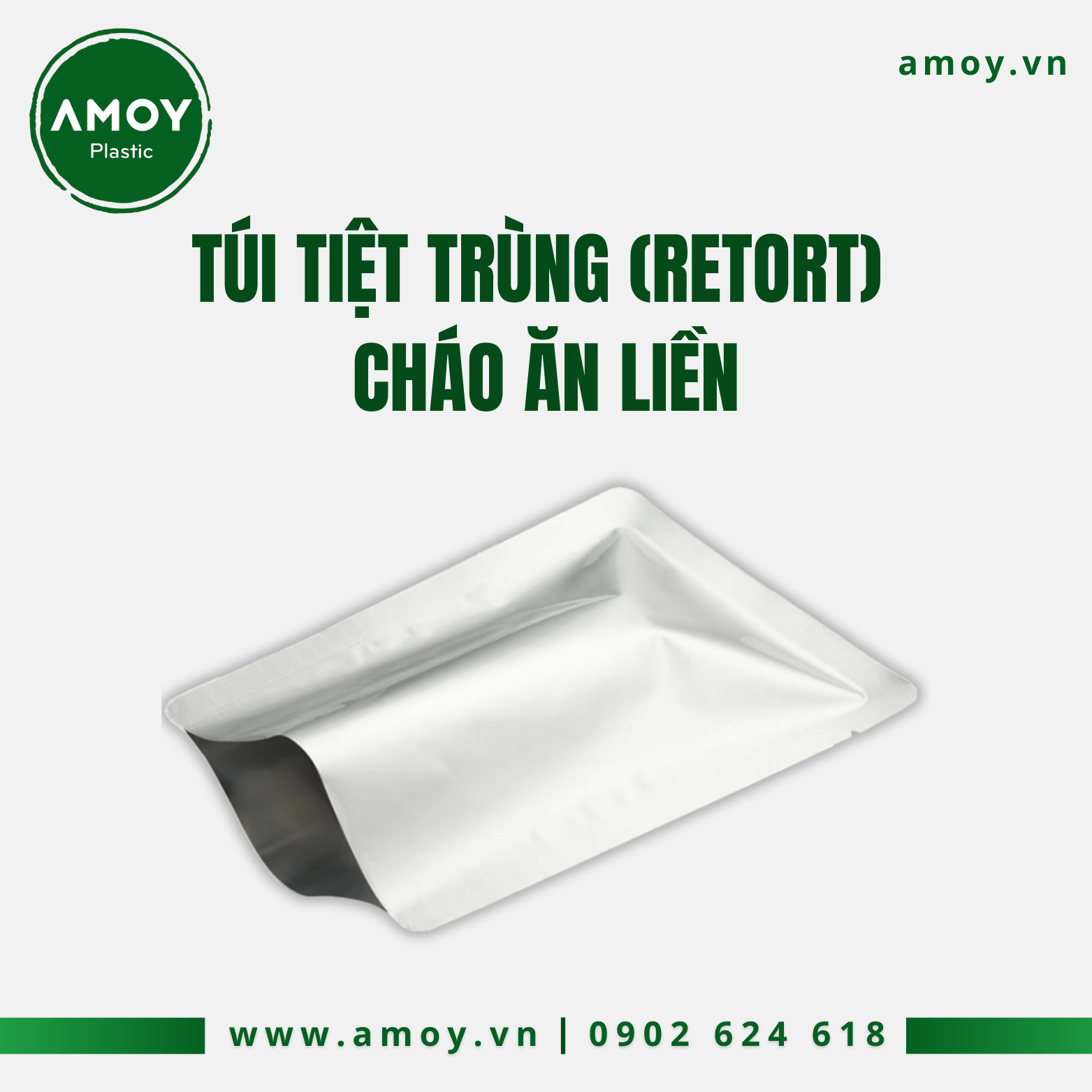
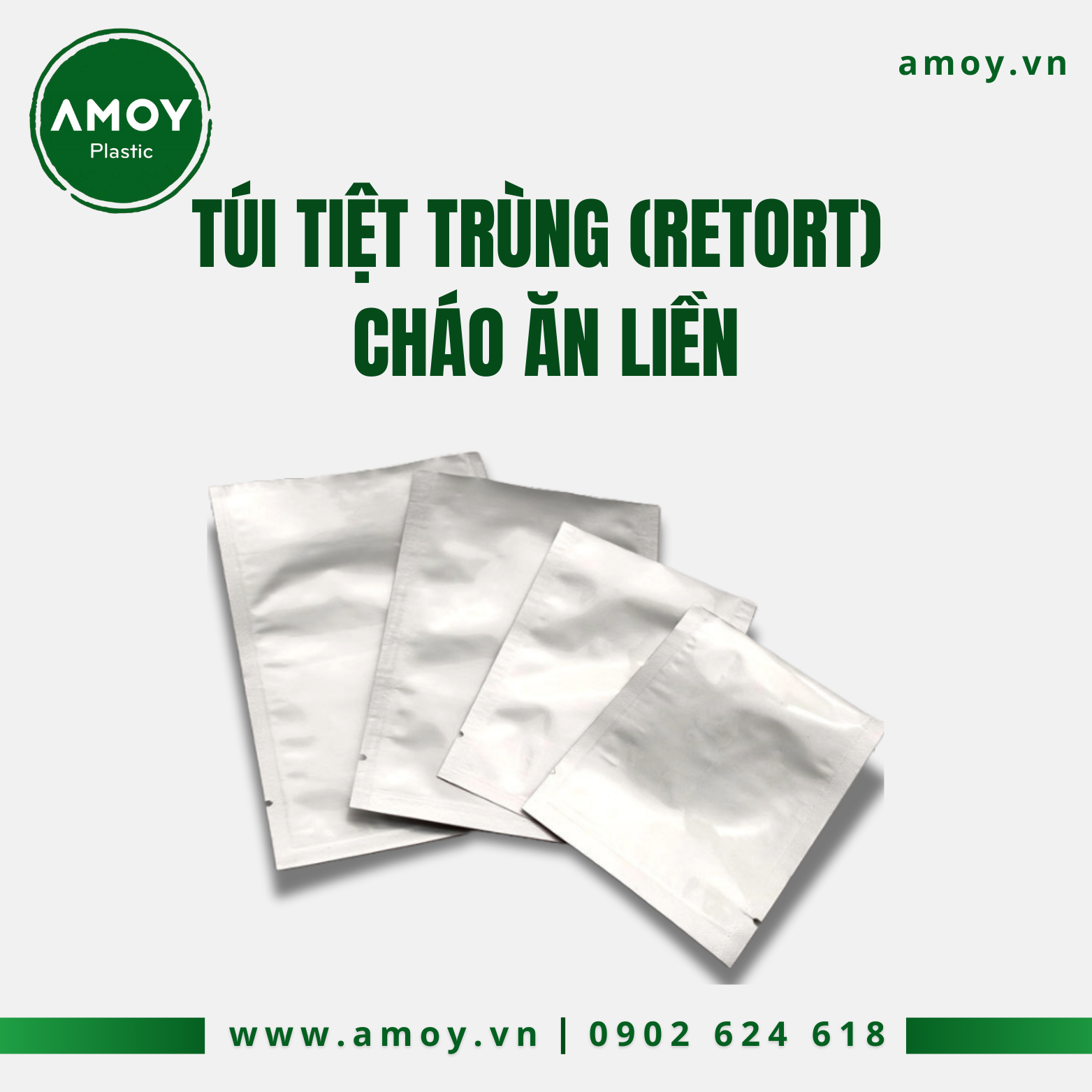




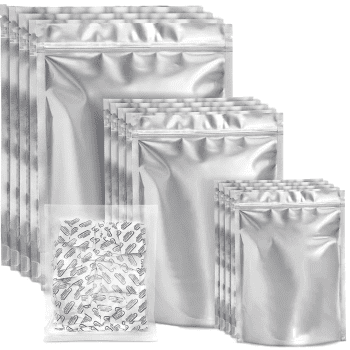
Our instant porridge packaging uses retort 3-side-seal pouches engineered for in-pack sterilization at 121–135 °C, enabling ambient shelf life without cold chain. The laminate delivers high barrier, strong seals, and dependable VFFS/HFFS runnability for export programs.
What Is a Retort 3-Side-Seal Pouch?
Format: pre-made pouch sealed on three sides (one open side for filling), optimized for steam/over-pressure retort.
Use cases: single-serve/family-size instant porridge packaging, soups, sauces, baby food, ready meals.
Structure & Materials (retort-ready)
-
Outer print web: dimensionally stable for register/cut accuracy and premium graphics.
-
Barrier core: foil or high-barrier alternative (e.g., EVOH-based) to control OTR/WVTR and light.
-
Inner seal layer: retort-grade sealant ensuring hermetic seals and food-contact safety.
Key Technical Highlights
-
Retort capability: designed for 121–135 °C (cycle validated per product/line).
-
Seal performance: tight seal window; high seal strength (ASTM F88).
-
Barrier: low OTR/WVTR to protect flavor, texture, inclusions.
-
Print: rotogravure up to 8 colors; optional matte/gloss zones.
Business Benefits for Brands & Co-Packers
-
Shelf-stable distribution for broader reach and e-commerce.
-
Operational efficiency: fewer post-retort rejects; consistent machinability.
-
Brand impact: premium print with clean, flat presentation.
-
Audit-ready: documentation for ISO/HACCP and food-contact compliance.
-
Lower logistics cost vs glass/cans; instant porridge packaging stays lightweight yet durable.
Applications (Instant Porridge / Congee)
-
Rice-based porridge with meat/seafood/vegetable inclusions
-
Baby porridge and gentle-texture meals
-
Asian-style instant congee packaging variants (plain, chicken, fish, mushroom)
-
Broths and soups with particulates
Formats, Features & Options
-
Format: 3-side-seal (standard rectangles or custom die-cuts)
-
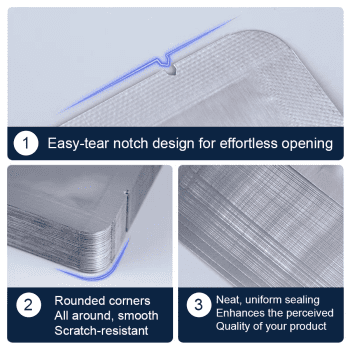
Opening aids: easy-tear notch; laser score on request
-
Closures: tape reclose; spout fitments for pourables (non-foil builds)
-
Merch: euro-hole, rounded corners, batch-code window
-
Surface: gloss overall; selective matte effects available
Technical Specifications (typical ranges; final per SKU)
-
Retort temperature: 121–135 °C
-
Seal strength target: defined per pack width (ASTM F88)
-
COF: tuned to your line for feed stability (ASTM D1894)
-
Laminate thickness: matched to viscosity/particulates and drop resistance
-
Printing: rotogravure up to 8 colors with food-grade inks
Quality Systems & Food-Contact
-
Systems: ISO 9001, ISO 14001, HACCP
-
Food contact: compliant materials; migration/lot traceability (CoA/CoC)
-
In-process QC: seal strength, COF, print register, defect monitoring; retention samples
Line Compatibility & Validation
-
Compatible with VFFS/HFFS and semi-auto filling.
-
Guidance on retort recipe, dwell/pressure, pre-/post-retort handling, cool-down.
-
Seal window tuning for instant porridge packaging lines to minimize warpage/leakers.
Comparison vs Alternatives
-
Glass jars: excellent barrier but heavy/fragile; high freight & breakage risk.
-
Cans: robust yet less flexible for portion sizes/graphics.
-
Retort pouches: faster heat penetration for instant porridge packaging, strong shelf appeal, lower total logistics cost.
Customization & Supply
-
Made-to-order size, gusset depth, laminate build, opening aids.
-
Artwork support: dielines, color targets, prepress proofing.
-
Delivery terms: FOB/CIF with export packing.
-
MOQ (typical): 20,000–30,000 pouches per SKU (size/design dependent).
-
Claims guidance tailored to instant porridge packaging requirements in target markets.
Handling & Consumer Guidance
-
Microwave: foil laminates are not microwave-safe; heat via hot water or transfer to a bowl. Non-foil builds can be specified for microwave use.
-
Storage: ambient; avoid sharp stacking pressure before retort.
FAQs – Instant Porridge Packaging (Retort Pouch)
Is this instant porridge packaging microwaveable?
Foil: no. Non-foil, high-barrier variants can be designed for microwave use.
Can it handle particulates (meat/veg)?
Yes. Laminate/seal specs are tuned to particle size and viscosity to prevent puncture/delamination.
Is it recyclable?
Conventional retort laminates are mixed-material and not widely recyclable; emerging non-foil, high-barrier options can be discussed by market.
What print quality is achievable?
Rotogravure up to 8 colors with crisp halftones, fine text, and selective-matte effects.





Reviews
There are no reviews yet.